
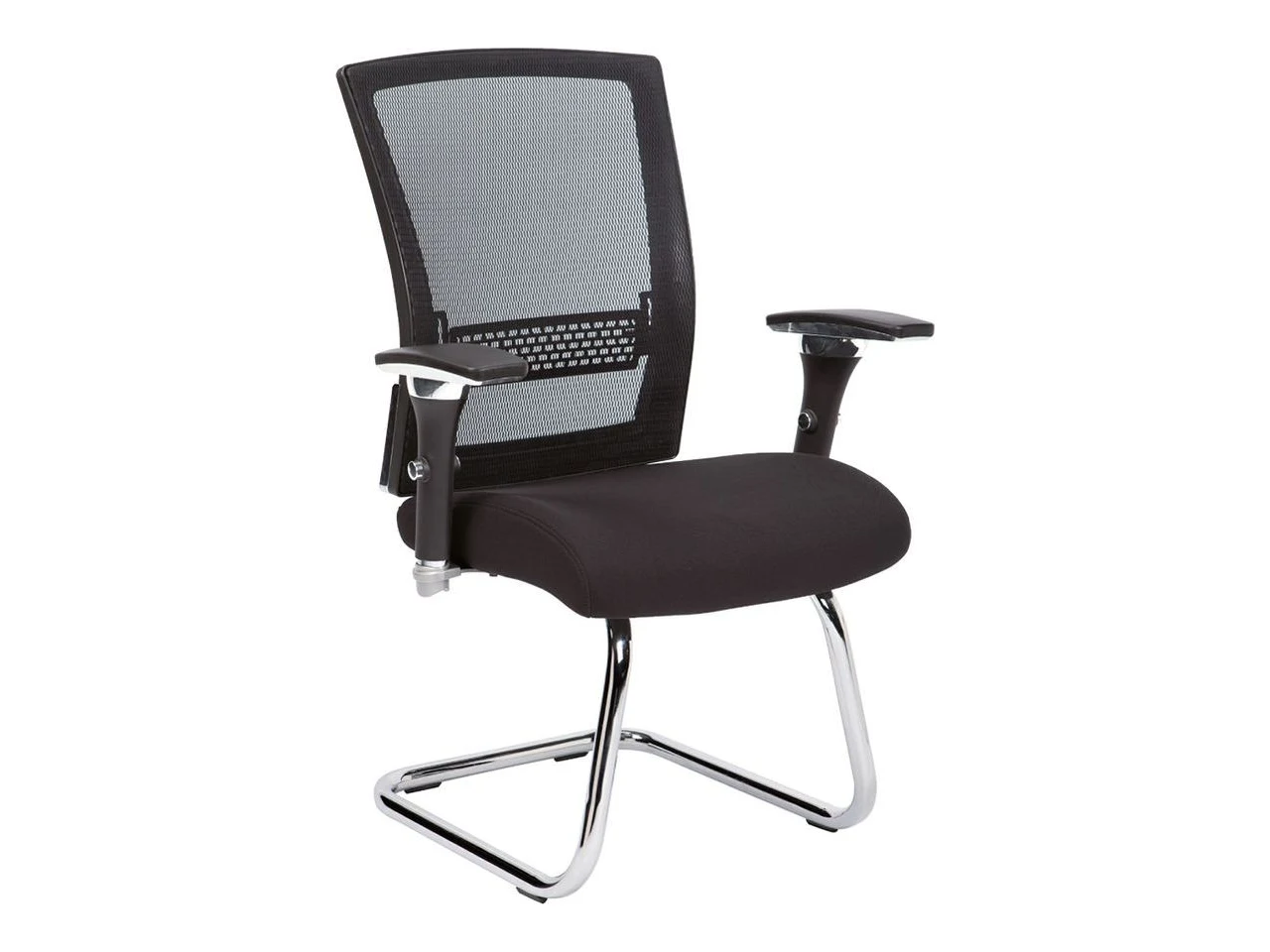
Most of our buyers have never stood on our floor in Anji, and plenty never will — the order is decided, sampled and inspected over video. We run these sessions every week, so we know exactly what a camera can prove and where it quietly lies. An executive chair is a particularly tricky subject for remote evaluation, because the parts that decide its life are the parts wrapped in foam and leather. Here is the honest map.
What video does genuinely well
A live walkthrough verifies the basics that paper cannot: the factory exists, the line is running, your order is physically on it. On finished executive chairs, the camera is good at surfaces and functions. Stitch pitch and seam straightness on the bolsters show up well in close-up. Upholstery grain, perforation, logo embroidery — all checkable. Function demos work too: gas lift through its full stroke, tilt and lock at each position, armrest adjustments, a chair spun on its base. Packaging is fully verifiable — carton print, foam inserts, the parts bag, an assembled-versus-knock-down check. And the stamps: a close-up of the class mark on the gas cylinder steel, the label under the seat, the lot code. We show all of these without being asked, because a buyer who has seen them argues less at the port.
What the camera structurally misses
Now the other list, and it is the more important one. Foam density does not photograph — a 30 kg/m³ seat and a 55 kg/m³ seat look identical on camera and feel different in year two, which is why the density number belongs in writing, as we covered in our foam density note. Weld penetration is invisible under upholstery, and so is the steel gauge of the frame — the whole problem we described in frame construction. Torque on fixings cannot be seen, only demonstrated with a wrench on camera. Colour is actively unreliable: white balance shifts between phones, lighting changes a tan leather into two different products, so never sign off a colour from a screen — courier a physical swatch. And the deepest limitation: a camera shows what the operator points it at. An edited video, or a tour that glides past the rework bench, is marketing with a timestamp.
How to run a session that actually verifies something
The difference between a guided tour and an inspection is who directs it. Five habits turn video into evidence. Pick the units yourself: have the cartons numbered on camera, call out three numbers, watch those exact cartons opened — not the two chairs waiting conveniently by the window. Insist on one continuous, unedited shot for anything that matters; cuts are where problems live. Agree a checklist beforehand, the same way a third-party inspector works, so the session walks a list instead of wandering. Put numbers on camera: a tape measure on seat width and back height, a scale under the chair — weight is the cheapest fraud detector in seating, because a frame that lost steel or a seat that lost foam loses kilograms, and a bathroom scale catches what a lens cannot. Finally, keep the recording with the order file; a dispute six months later is settled by footage, not memory.
Where video fits next to real inspection
We would rather lose this point as a sales pitch than oversell it: video does not replace a pre-shipment inspection on a serious order. The working split looks like this. Video covers development — sample reviews, colour direction with a swatch in hand, mid-production progress checks, and the carton-count walk before booking. A third-party inspector with hands covers the final AQL sampling, because hands feel a loose armrest and a sticky mechanism that a lens never will. Lab testing covers structure: we build to BIFMA and EN test methods and third-party testing can be arranged per order, which answers the questions no camera can — cycle counts, static loads, stability. A buyer who uses all three layers, each for what it is good at, spends less than one who flies out twice and still misses the foam.
The executive-chair specifics
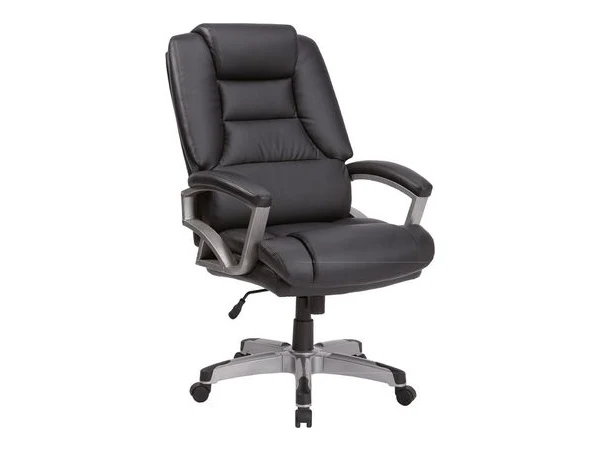
Two final notes specific to the high-back leather category. First, symmetry: bolster height and wing alignment are where hand-built upholstery drifts, and a straight-on, centred shot of the chair against a grid background shows asymmetry better than an in-person glance — one genuine advantage video has. Second, the sit test is honest even on camera: have someone of stated weight sit, recline to full lock, and lean on each armrest in turn while the frame is miked close. Creaks record beautifully. A chair that is silent on video under a 95 kg colleague is telling you something real about the frame and mechanism underneath.
The cost math, for completeness
A structured video session costs you an hour and costs us an afternoon of preparation, which is why some factories resist doing them properly — preparation is exactly what a lazy session skips. Compare that against the alternatives: a buyer trip to China runs into thousands of dollars and days of calendar, and a third-party man-day is a few hundred dollars plus scheduling lead time. The sensible program uses video early and often precisely because it is nearly free, then spends the inspection money once, at the end, where hands and AQL tables matter. What you should not do is let the free tool replace the paid one on a first order — that trade saves a few hundred dollars and exposes a container.
If you want to evaluate a model remotely, book a session with the export desk — we will number the cartons, hand you the choice of units, and keep the camera rolling. Browse the executive range first, or read how the OEM/ODM workflow builds these checks into the sample stage.